← Back to Briefs
Loading dispatch…
Here’s what’s happening in geopolitics today. A shooting in Washington continues to reverberate, with investigators uncovering the suspect’s political motives, as global leaders react and reach out to Donald Trump.
At the same time, diplomacy is in full swing, with Iran in talks with Russia and Palestinian politics seeing a shift after local elections. Meanwhile, pressure is building in the UK, where Keir Starmer faces a potential parliamentary probe over a controversial appointment.
In today’s deep dive, we put the spotlight on the Sahel region as the JNIM-FLA offensive has shocked the Malian government to its core.
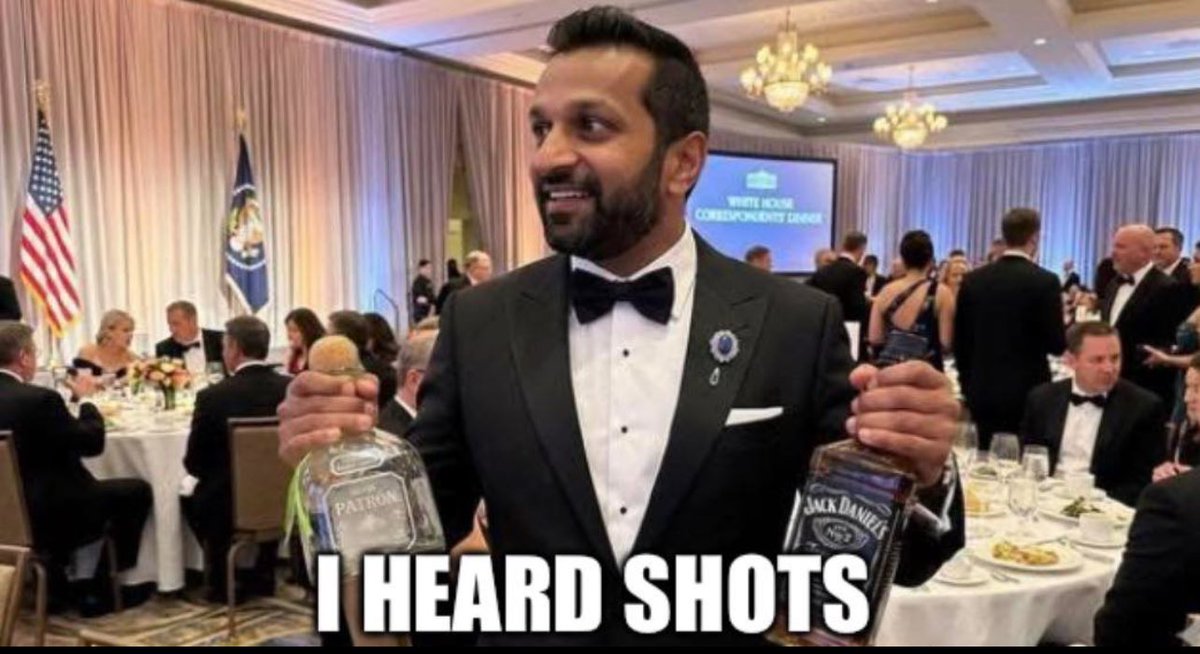
Investigators say the suspect in the Washington gala shooting sent writings to family members shortly before the attack, outlining grievances against Trump and his administration. Authorities believe the messages, which included political criticism and references to targeting officials, are central to establishing motive, with the incident being treated as a politically driven attack. The suspect was arrested at the scene after opening fire near a security checkpoint, and now faces multiple federal charges as investigators continue examining his background and communications.
Iran’s Foreign Minister Abbas Araghchi has arrived in Saint Petersburg for talks with Russian President Vladimir Putin, as part of an ongoing diplomatic tour. The meeting is expected to focus on the ongoing conflict involving Iran, as well as stalled negotiations with the United States following the collapse of recent talks.
Turkish President Recep Tayyip Erdoğan held a phone call with Donald Trump following the shooting incident at the White House Correspondents’ Dinner in Washington. During the call, Erdoğan condemned the attack as a “heinous act against democracy and press freedom” and expressed relief that Trump and other attendees were unharmed. He also conveyed his well wishes and support.
Loyalists of Palestinian President Mahmoud Abbas have won the majority of seats in recent municipal elections across the West Bank, with additional gains in parts of the Gaza Strip. The vote marked the first election of any kind in Gaza since 2006, with polling held in the city of Deir al-Balah despite ongoing conflict and logistical challenges. Turnout was relatively low, and Hamas did not formally participate, though some locally aligned candidates secured a small number of seats, while Fatah-backed lists dominated overall.
UK Prime Minister Keir Starmer is facing a parliamentary vote on whether to launch a formal probe into his handling of Peter Mandelson’s appointment as ambassador to Washington. The proposed inquiry would examine whether Starmer misled Parliament by claiming proper procedures were followed, despite reports that security vetting concerns had been raised and potentially overridden. While opposition parties are pushing for the investigation, Starmer’s government has dismissed the move as politically motivated, with the outcome of the vote likely to hinge on Labour’s parliamentary majority.
What happened in Mali on April 25 is not a minor insurgent flare-up. It looks like the opening move of a coordinated, large-scale offensive by the Azawad Liberation Front (FLA) and JNIM, and the results in the first 48 hours have been significant enough to shake the foundations of the Malian junta.
The scope of the attacks was wide. Fighting broke out simultaneously across multiple locations including Bamako, Kidal, Gao, Sévaré, and Kati, meaning this was not a single front engagement but an organised attempt to stretch Malian and Russian Africa Corps forces as thin as possible. Russia's Africa Corps, characteristically, framed the whole thing as a Western-backed coup attempt, claiming 10,000 to 12,000 militants were deployed and that over 1,000 were neutralised across the various battlefields. Those figures should be treated cautiously. The Africa Corps has a well-documented habit of inflating enemy casualties and attributing setbacks to foreign intelligence services rather than acknowledging the organic military capability of groups like JNIM. The reality at the moment is that the Africa Corps is not running as efficiently as its predecessor ‘Wagner’ did under Prigozhin. If I had to guess, there is a large difference in management and “work culture” when you’re a PMC under Prigozhin and working for an already corrupt military bureaucracy.
TODAY IN HISTORY (April 27, 1810): Beethoven writes the world's most recognizable piano composition
On this day in 1810, Ludwig van Beethoven shared his feelings in a beautiful piano piece called Für Elise. But it wasn't known to the world until 1867, decades after he died, when a scholar found it. And we still don't know who, exactly, the Elise in Beethoven's dedication was—or whether there actually was an Elise.

Today we cover how the Iran war is shattering the Gulf states' decades-long financial bargain with the West and why the tremors could shake the foundations of the dollar itself.
As it is ANZAC day, we're doing a deep dive on Australia's $53 billion defence boost in the next decade. JNIM has also launched a new offensive in the Sahel region.
Iran is reviving old tankers to stop possible overflow, as more supplies arrive to U.S. bases and a third carrier has officially arrived.