← Back to Briefs
Loading dispatch…
Here’s what’s happening in geopolitics today. Today’s headlines stretch from the Middle East to the Americas, with Israel striking key infrastructure in southern Lebanon and a deadly U.S. refueling plane crash in Iraq underscoring how tense the region has become.
Elsewhere, a suspect was shot after ramming a truck into a Michigan synagogue, Nepal’s voters handed former rapper-turned-mayor Balen Shah a landslide political victory, and Cuba says it has quietly opened talks with Washington as an oil blockade squeezes the island’s economy.
In today’s deep dive, we address some growing claims about the Iran conflicts impact on the Sudanese Civil War.
A suspect was shot dead by security after driving a truck into the entrance of Temple Israel synagogue in West Bloomfield, Michigan, during preschool hours, triggering a fire and a large emergency response. One security guard was injured after being struck by the vehicle, but authorities said the roughly 140 children and staff at the synagogue’s early childhood center were safely evacuated. The FBI is investigating the incident as a targeted act of violence against the Jewish community, with reports that the suspect may have been armed and had explosives in the vehicle.
Former rapper and Kathmandu mayor Balendra “Balen” Shah is poised to become Nepal’s next prime minister after his Rastriya Swatantra Party secured a sweeping victory in the country’s March 2026 parliamentary elections. The party won roughly 182 of the 275 seats in parliament, marking the largest majority in decades and a dramatic collapse of Nepal’s traditional political parties. The result follows major youth-led protests in 2025 over corruption and governance, with Shah’s campaign appealing strongly to younger voters demanding political reform.
Israel has destroyed the Zrariyeh Bridge over the Litani River in southern Lebanon as part of a wave of strikes targeting infrastructure it says is used by Hezbollah to move fighters and weapons. The Israeli military said the crossing was a key route linking areas south of the river, while Lebanese officials reported additional airstrikes across the region that caused casualties and damage to nearby towns.
A U.S. Air Force KC-135 refueling aircraft crashed in western Iraq on March 12 during operations linked to the ongoing conflict with Iran, killing four of the six crew members on board. U.S. Central Command said the incident occurred in “friendly airspace” and was not caused by hostile or friendly fire, though the exact cause remains under investigation. Rescue efforts continued for the remaining two crew members, while another aircraft involved in the incident landed safely.
Cuba says it has opened talks with the United States as the island faces a severe fuel shortage triggered by a U.S.-led effort to block oil shipments to the country. Cuban President Miguel Díaz-Canel said the discussions aim to address bilateral tensions and explore possible solutions while respecting each country’s sovereignty. The talks come as Cuba endures widespread blackouts and economic disruption after three months without new petroleum supplies.
There’s been a growing claim circulating online that the recent conflict involving Iran has somehow weakened the Rapid Support Forces (RSF) in Sudan, allowing the Sudanese Armed Forces (SAF) to regain ground. This interpretation is overly simplistic and largely driven by narrative-building rather than the reality on the ground. The recent battlefield developments in Sudan are better explained by internal consolidation and shifting regional dynamics, not by events in the Gulf. Consolidation
Since the SAF recaptured Khartoum, the government has been able to steadily consolidate control across central and eastern Sudan. This consolidation has allowed SAF logistics, command structures, and manpower to stabilize after the chaotic phases of the war in 2023–2025. With those rear areas secured, SAF units have gradually been able to redirect resources toward contested fronts.
At the same time, regional pressure on RSF supply routes has increased significantly. Over the past several months Saudi Arabia, Turkey, and Egypt have all taken a more active role in attempting to disrupt supply networks reaching RSF-controlled territory. While these efforts remain partially opaque, the cumulative effect may have tightened the flow of weapons and resources reaching RSF positions.
The strategic situation in Sudan has also shifted after the RSF consolidated control over much of Darfur, a process marked by large-scale violence and massacres that drew international attention. By late 2025 the trajectory of the war suggested that both sides were entering a consolidation phase, focusing on securing internal territories before returning to larger offensives along the major fault lines of the conflict.
That phase now appears to be ending.
The current fighting reflects renewed major operations along the main frontiers between SAF and RSF-held areas, rather than an external shock from events in the Middle East.


TODAY IN HISTORY (March 13, 1852): Uncle Sam cartoon appears in The Lantern
On this day in 1852, the first popular and widespread image of Uncle Sam appeared in an American publication.. The cartoon is credited to Frank Bellew, an illustrator for The Lantern, who made “Raising the Wind”—the political cartoon in which Uncle Sam first appeared. An imposing whiskered gentleman with a top hat and striped trousers, he would serve as an symbol of the United States for years to come, especially in U.S. Army recruitment posters and fliers.

Today we cover how the Iran war is shattering the Gulf states' decades-long financial bargain with the West and why the tremors could shake the foundations of the dollar itself.
As it is ANZAC day, we're doing a deep dive on Australia's $53 billion defence boost in the next decade. JNIM has also launched a new offensive in the Sahel region.
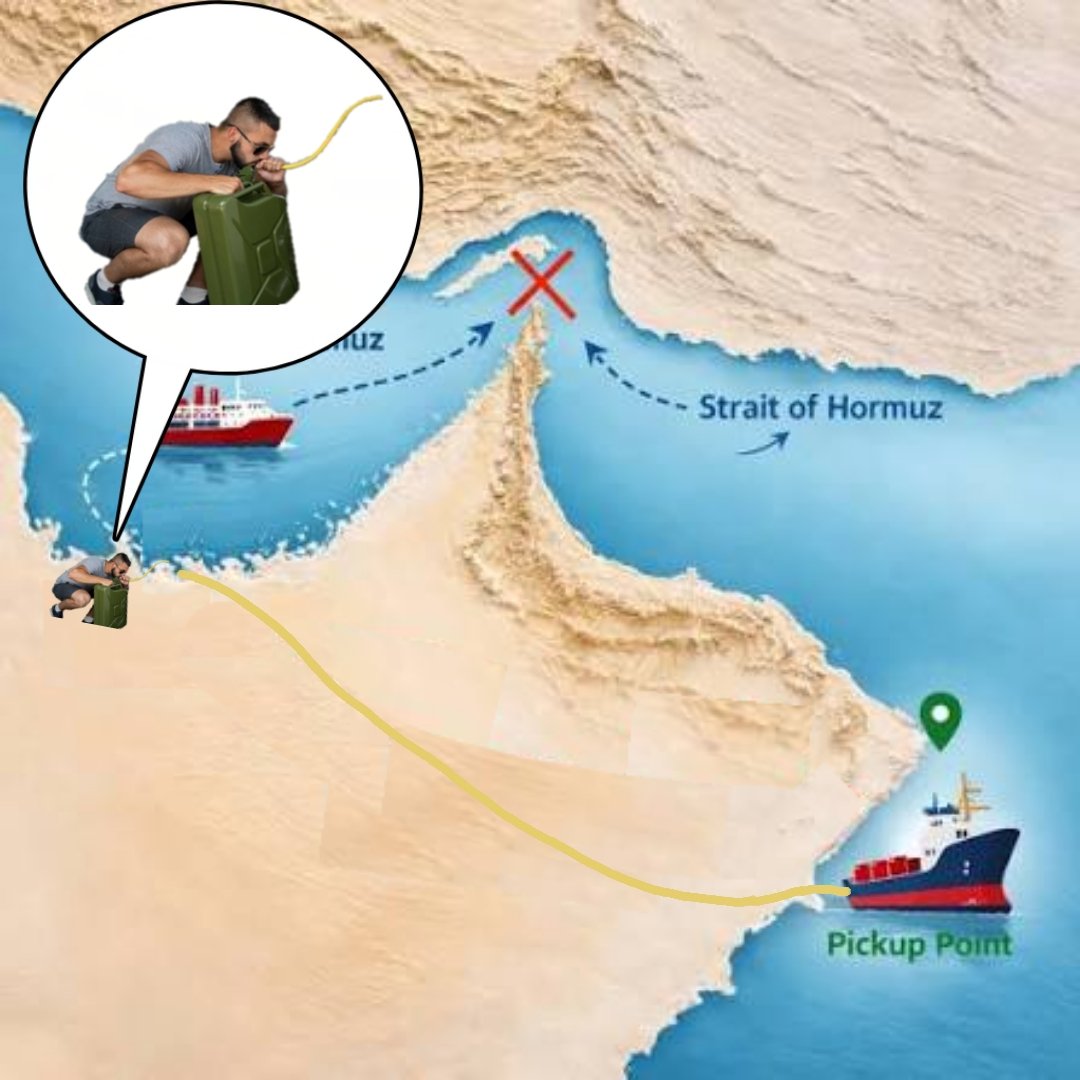
Iran is reviving old tankers to stop possible overflow, as more supplies arrive to U.S. bases and a third carrier has officially arrived.
Vista source for map
Importantly, UAE-linked activity supporting RSF networks has not disappeared. Evidence suggests that logistical and political channels tied to Abu Dhabi remain active.
Today, Ethiopian Prime Minister Abiy Ahmed — widely viewed as politically aligned with UAE regional initiatives — arrived in Abu Dhabi for an official visit. He traveled aboard an Ethiopian Airlines Boeing 787-8 (registration ET-ABJ) after departing from Djibouti, likely stopping in Dire Dawa before continuing onward to the UAE.
Meanwhile, a Pecotox-Air Boeing 747-409F cargo aircraft (registration ER-MDR, callsign PXA403) linked to UAE government logistics flew from Al Ain Airport in the UAE to N’Djamena International Airport in Chad, where it parked on the military apron upon arrival. Chad remains one of the key logistical corridors connected to RSF supply networks into western Sudan.
Taken together, these developments suggest the narrative that RSF setbacks are a byproduct of the Iran conflict is misleading. The reality is a long-running regional proxy dynamic, where Sudan’s battlefield momentum is being shaped primarily by local consolidation, shifting regional support, and ongoing supply competition rather than distant wars. Great source for UAE, Horn of Africa and Sudanese Conflict ^ where todays flight information came from
Sources available upon request!